
“One arrives in this land called ‘Katakekaumene.’ There are no trees here, only Katakekaumene vineyards. (…) The ground here is ashen; this rugged and rocky country looks black as if burnt down in a fire. Such soil adapts well to viticulture, just like the ashy soil of Catania, where they still produce good and abundant wine. Some authors concluded upon such land that there was a good reason for calling Dionysus as Pyrigenes, ‘born out of fire,’” Strabo wrote.

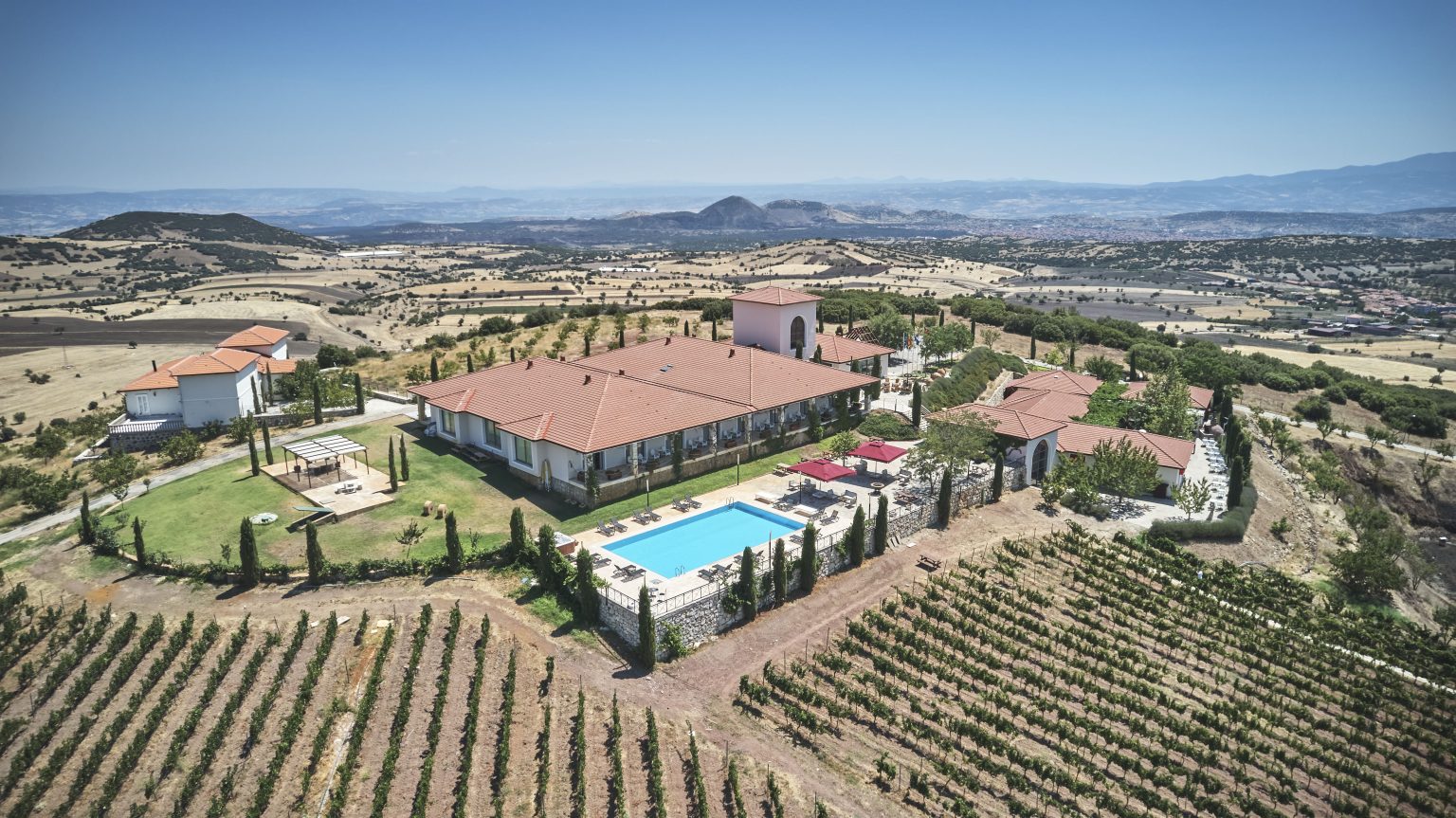
Strabo, the great geographer of antiquity, calls this region “Katakekaumene” or “Yanık Ülke” (Burnt Country) because of the coal-black basalt stones in his work Geographica. The Akçura family, owners of one of Türkiye’s most prestigious hotel chains, established the Yanık Ülke Vineyards and Villa Estet Vineyard Hotel to contribute to wine tourism.
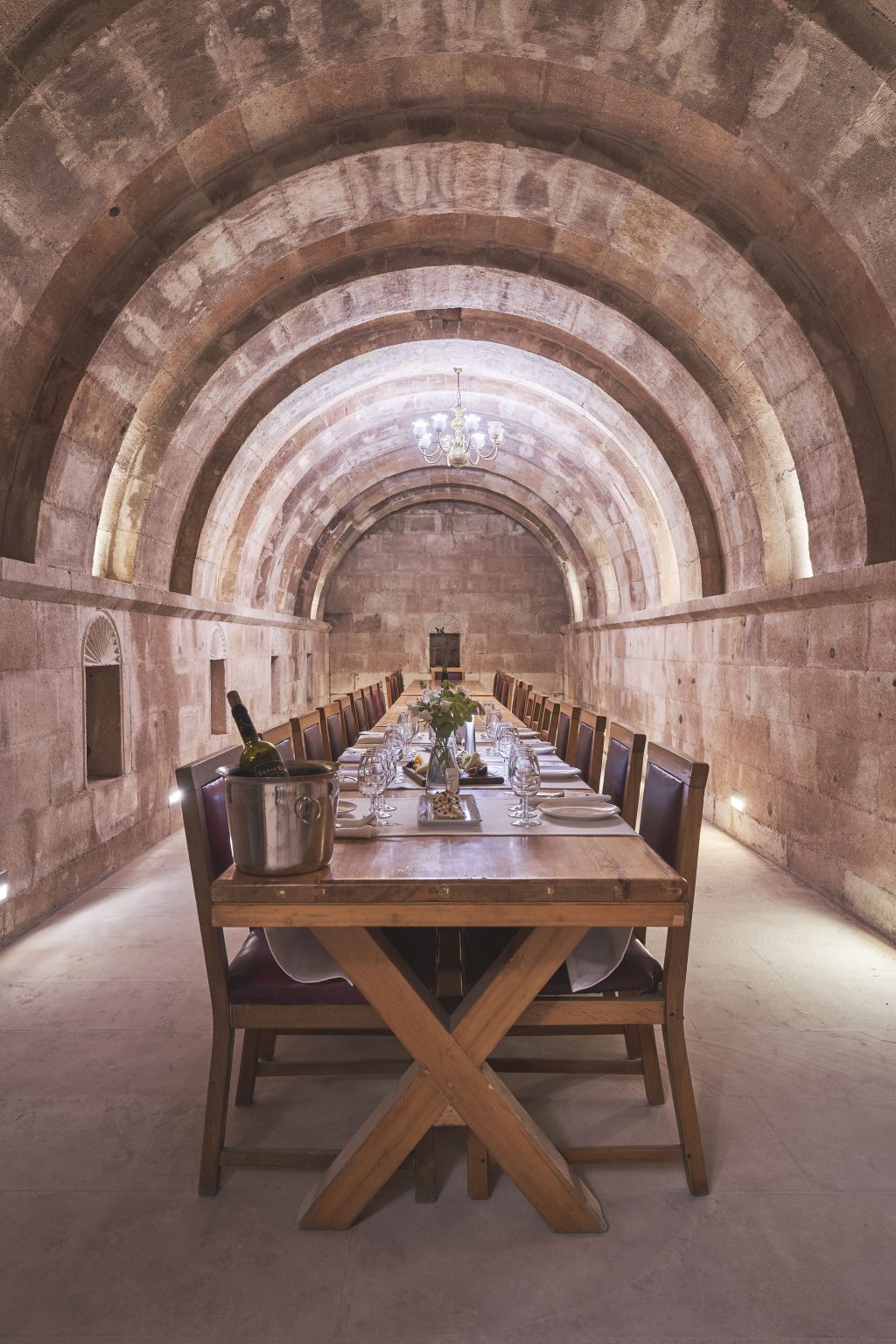
Yanık Ülke Vineyards, the only member of the Lydia Historical Wine Route with an accommodation facility, resides on the slopes of the distinctive Divlit Volcano. The Vineyard Hotel features refined architecture with its comfortable facilities, elegant restaurant, mystical cellar made of local stones and tasting areas. The comfortable Villa Estet hotel and restaurant at the top of the vineyards overlooking the Gediz Plain and the Divlit Volcano, the delightful wines, the town of Kula a few kilometres away with its well-preserved Ottoman civil architecture examples of Anatolia, the Divlit Volcano and the Geopark area above it are all further reasons that make a trip to the Yanık Ülke Vineyards a rich one.